Peat is a natural material of significant importance across various industries. It serves as a crucial element in the production of fuels, fertilizers, cosmetics, and numerous other products. Ukraine is endowed with abundant peat bogs, rendering them a valuable national resource. Within this publication, you will discover valuable insights into peat extraction, leading extraction methodologies, its diverse applications in various sectors, and its prospective future.
The most popular peat extraction technologies and their impact on the environment
Peat extraction is a intricate process that demands a specialized approach to environmental conservation. Contemporary technologies enable extraction with minimal disruption to biotopes and natural ecosystems. Employing environmentally sustainable methods is a pivotal component in safeguarding our natural surroundings.
- Centrifugal water removal method for peat extraction involves draining water from the peat bog, thereby reducing its water content. The environmental consequence is the drying out of the marsh and its decreased role as an aquatic habitat for various species.
- Usage of machinery for opening peat bogs permits the efficient removal of the upper layer, rich in water. However, this can lead to vegetation destruction and disturbance of the ecosystem equilibrium.
- Solid block extraction techniques entail removing peat in block form, subsequently transported to designated drying sites. This can alter the bog’s topography and contribute to its degradation.
- Utilizing pneumatic systems involves removing the top peat layer using airflow. The environmental effect includes the emission of dust and particles into the air, potentially affecting air quality in the extraction area.
- Peat mining technologies encompass removing the top bog layer and extracting peat from various layers. This can result in substantial landscape changes and the loss of natural wetlands.
- Methods employing drainage channels serve to eliminate water from peat bogs. This may alter the bog’s hydrological balance, influencing its biotic components.
- Peat quarries for extraction necessitate removing the top layer of the bog for peat production. The environmental outcome involves the alteration of natural terrains and topographical shifts.
- Utilization of biogas technology for energy needs involves harnessing biogas produced during peat decomposition to generate electricity. The environmental effect lies in methane utilization and reduced gas emissions into the atmosphere.
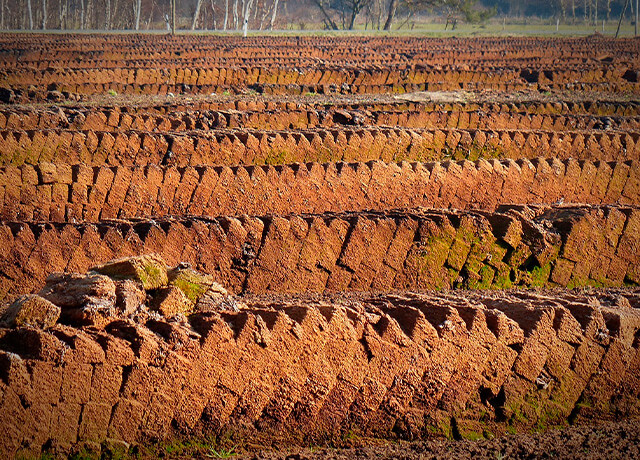
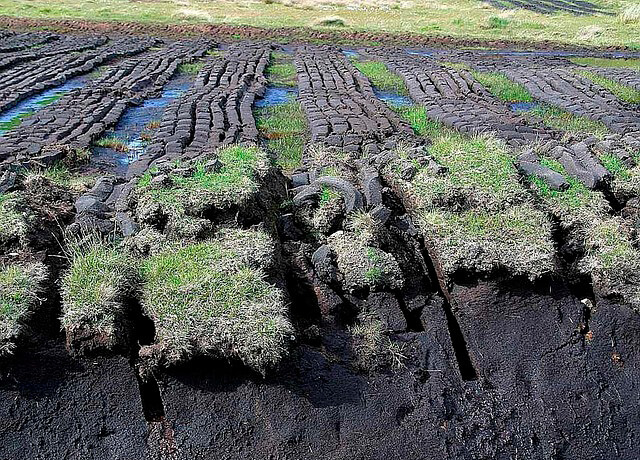
These diverse technologies have varying effects on the environment, each with its own set of advantages and disadvantages. While certain methods may excel in terms of efficient peat extraction, they frequently come with adverse consequences for the natural surroundings. Diminished water resources, disturbance of vegetation and landscapes, as well as air and water pollution, are just a few of the potential side effects stemming from peat extraction technologies.
Use of peat in the fuel and energy industries
The utilization of peat in the fuel and energy sectors stands as a contentious topic in today’s world. Peat, a renewable natural resource, can serve as an energy fuel. Peat briquettes, utilized in solid fuel boilers, can be derived from it, presenting a more environmentally friendly energy option when contrasted with fossil fuels.
Nonetheless, the utilization of peat comes with its drawbacks. Foremost, its extraction and consumption can result in greenhouse gas emissions that contribute to global warming. Furthermore, this process can have ramifications for the natural environment and biodiversity within peat bogs.
Modern technologies offer more efficient and eco-friendly approaches to peat utilization. For instance, the production of biogas and peat pellets can be less detrimental to the environment, aiding in emission reduction and resource-efficient utilization.
In summary, the use of peat in fuel and energy industries bears both positive and negative aspects. It’s pivotal to develop and implement novel modern technologies that ensure the effective use of this natural resource with minimal environmental impact.

Modern challenges and prospects in peat extraction
Modern peat extraction encounters various challenges linked to environmental and economic considerations. The growing awareness of natural resource preservation and environmental protection questions conventional peat extraction methods due to their adverse effects on wetland ecosystems.
However, technological advancements and scientific research can offer new possibilities for peat extraction. The adoption of more ecologically sound techniques, such as alternatives to traditional fuel materials, can aid in minimizing the adverse environmental impact.
The potential utilization of peat in energy and biogas production also presents opportunities for industry advancement. Contemporary technologies enable the use of peat as a source of alternative energy, which could prove to be an efficient and eco-friendly choice.
While modern peat extraction confronts significant challenges, it also holds potential for development through the implementation of fresh technologies and approaches that ensure its utilization with minimal negative influence on the environment.
Peat is a vital natural resource with significant potential across various domains. Guaranteeing environmentally sustainable peat extraction and utilization is a crucial endeavor in safeguarding our natural surroundings and fulfilling society’s energy requirements.
Frequently Asked Questions:
In Ukraine, various peat extraction technologies are employed, including centrifugal water removal, machine-assisted excavation, solid block extraction, pneumatic systems, and drainage channels.
The impact of these technologies varies. Some, like centrifugal water removal, may reduce the aquatic habitat, while machine-assisted excavation can disrupt vegetation. Pneumatic systems release particles into the air, affecting air quality. The choice of technology affects factors such as hydrology, topography, and biota.
When choosing extraction methods, it’s vital to prioritize environmentally friendly approaches that minimize ecosystem disruption, water resource reduction, and air or water pollution. Balancing efficient peat extraction with environmental preservation is a key concern.
How useful was this post?
Click on a star to rate it!
Average rating 5 / 5. Vote count: 1
No votes so far! Be the first to rate this post.
We are sorry that this post was not useful for you!
Let us improve this post!
Tell us how we can improve this post?